The 100kg Tomato Experiment: What Worked, What Didn't, and What's Changing for 2027
From Bloody Butcher's bumper crop to a 680g Lulu's Best Ever, here's what my 2026 tomato experiment taught me, which varieties I'll grow again, and what's changing for 2027.
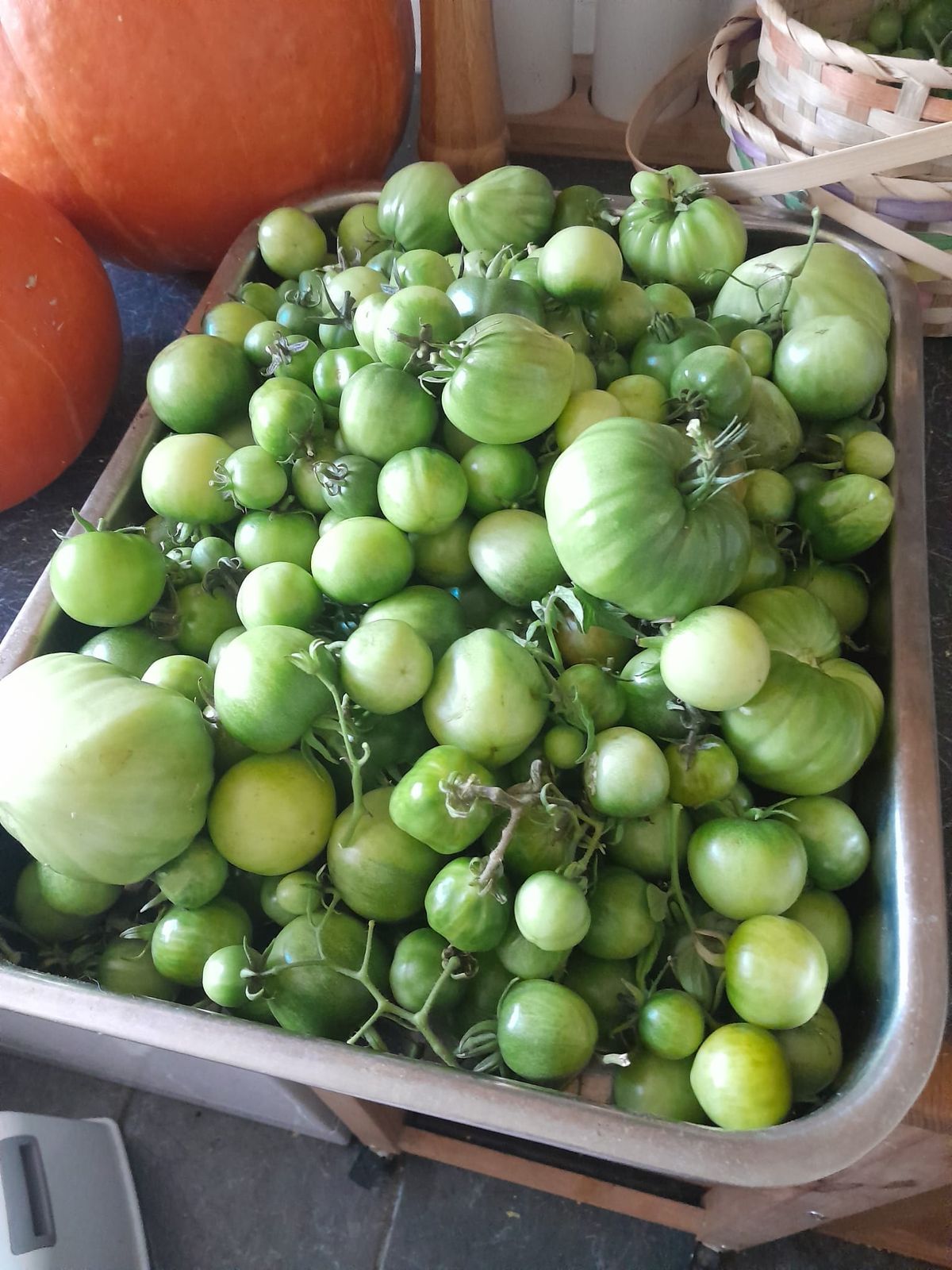
Earlier this year, I set out my strategy for growing twelve tomato varieties, all selected with a fairly straightforward objective: contribute as much weight as possible to my 100kg harvest challenge without turning the greenhouse into another full-time job.
The plan was simple enough. Grow a mixture of early croppers, reliable cherry tomatoes, big beefsteaks and a few varieties specifically chosen for cooking and preserving. Get plenty of tomatoes, keep the faff to a minimum, and try not to spend every visit to the allotment wrestling with an increasingly unruly jungle.
You can read the original plan here: The 100kg Strategy: 12 Tomato Varieties Selected for Pure Weight and Zero Drama.
So, how did it go?
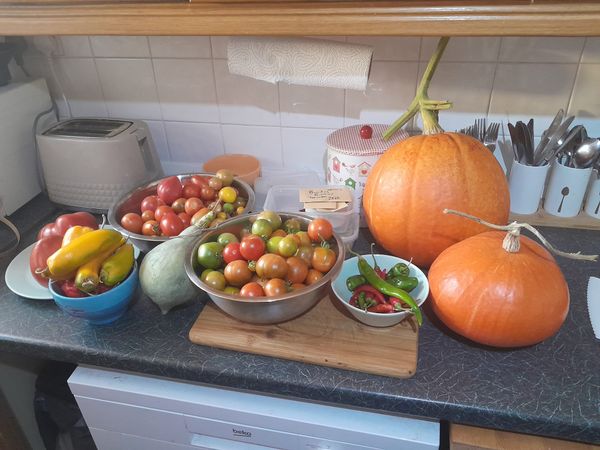
I've harvested just over 35kg of tomatoes so far this year, compared with 40kg last year. I've still got a handful of plants holding on, but at this point I'm expecting little more than green fruit from them. I suspect the final total won't change dramatically.
That's not quite last year's haul then, but hardly a disaster. Tomatoes have once again made a substantial contribution to my harvest, and I've learnt a fair bit about which varieties deserve another go and which are taking up valuable growing space without really earning it.
Some have been brilliant. A couple have been thoroughly underwhelming. And one of my biggest lessons has less to do with tomato varieties and more to do with remembering to label the bloody plants.
Let's get into it.
Bloody Butcher: The Undisputed Winner
If I could only grow one tomato variety again, it would be Bloody Butcher.
Hands down, my favourite tomato of the year.
The flavour is incredible, the yield has been massive, and the plants have cropped heavily from July right through to October. On top of that, I've had no pest or blight issues with them.
That's a pretty impressive set of results for a tomato that was selected partly because I wanted something that would get going early and contribute plenty of weight to the harvest.
It has done exactly that, and then some.
I've been so impressed that I've saved seeds and taken cuttings from my best plant. I want more of the same next year, and I'm not taking any chances on losing a variety that has performed this well.
It's easy to get distracted by the next interesting seed packet. I certainly enjoy trying new varieties, and there's always something else that looks worth growing. But when you find a tomato that tastes fantastic, crops heavily over a long season and doesn't give you grief, you have to ask yourself why you'd mess with a winning formula.
Bloody Butcher has earned its place for 2027. No question.
Lulu's Best Ever: Big, Beautiful and Back for More
Lulu's Best Ever has also had an excellent year, although the results have been a little more complicated.
The outdoor plants have been outstanding. One produced a tomato weighing 658g, the largest tomato I've ever grown.
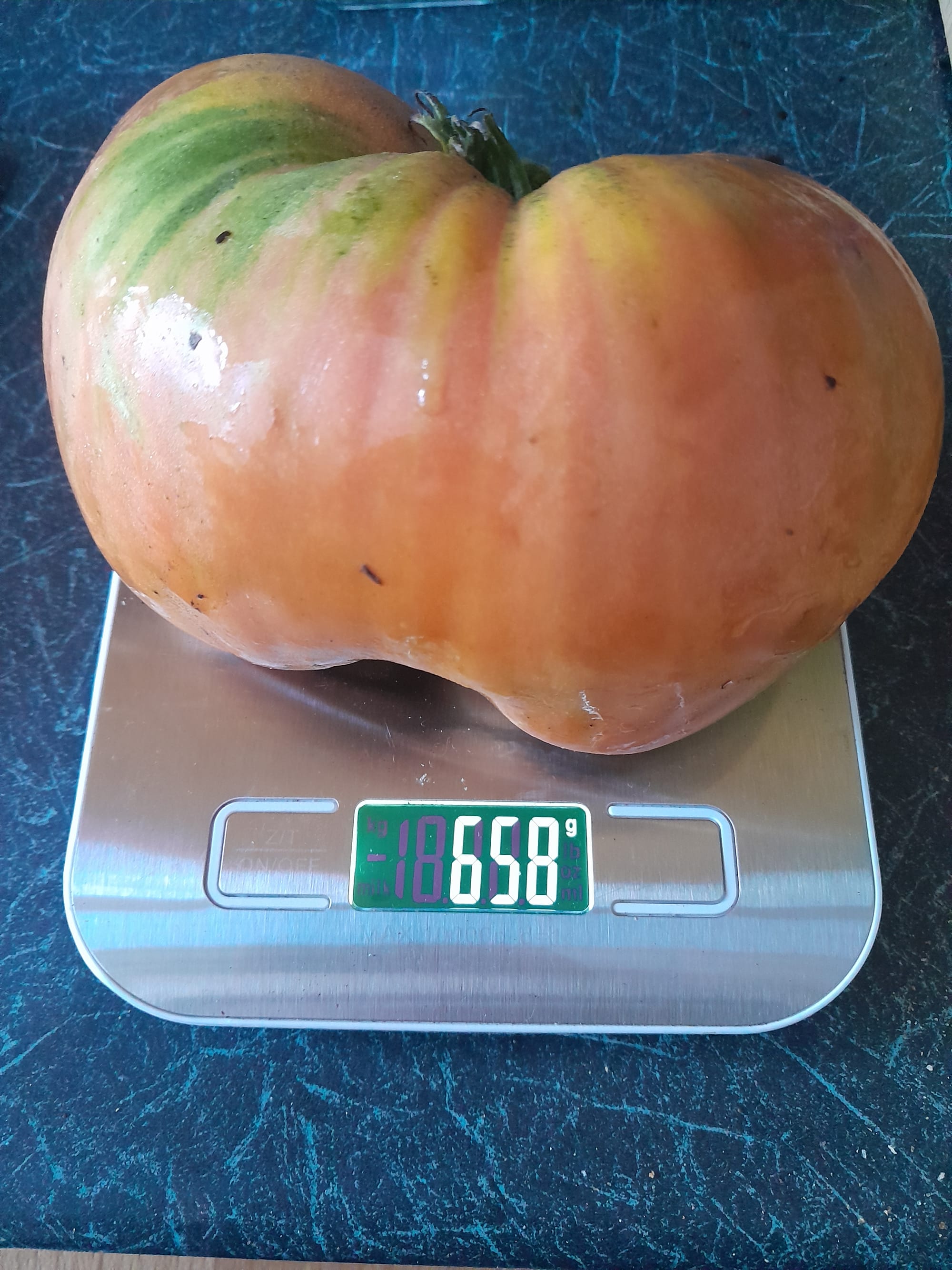
That's a serious tomato.
But the size is only part of the story. Lulu's Best Ever is also the best-tasting tomato I've grown. It has the flavour to back up the impressive appearance, which is not something you can always take for granted with the bigger varieties.
The outdoor plants have convinced me that this variety deserves another year. I've saved seed from the biggest specimen, so that's another one going into the 2027 plans.
The greenhouse plants, however, haven't performed as well as they did last year.
Initially, I wasn't entirely sure why. After a bit of thought, I suspect the answer might be light. The plants at the back of the greenhouse sit beneath an overhanging tree, which means they're getting more shade than I'd properly appreciated.
It's a slightly frustrating discovery, particularly when you've spent time growing plants from seed and then wonder why they're not delivering as expected. But it's also a useful lesson.
The variety hasn't suddenly become a bad tomato. The growing conditions may simply not have been giving it the best chance.
I'm already looking at rearranging the greenhouse for next season, moving things around so that plants have a better opportunity to grow well.
Lulu's Best Ever is staying. The greenhouse arrangements are what need rethinking.
Gardeners Delight: Nothing Flashy, Just Good Tomatoes
Gardeners Delight hasn't produced a particularly dramatic story this year, and that's precisely why I like it.
They're a bit middle of the road, if I'm honest. They're not the most exciting tomatoes I've grown, and they're not going to win any prizes for being unusual.
But the plants grow well and strongly, and I've still got three plants romping away at the allotment.
There's something to be said for that kind of reliability.
Not every variety needs to produce a record-breaking fruit or deliver some extraordinary flavour experience. Sometimes you want a plant that gets on with the job, produces a decent crop and doesn't demand too much attention.
Gardeners Delight does that for me. It has earned another year.
Golden Queen: A Little Bit of Sunshine
Golden Queen has been another pleasant surprise.
These produce small yellow fruits with a good flavour, and they're quite fun to grow. I particularly like the fact that they didn't split, which is always a welcome bonus when you're trying to get a useful harvest rather than a bowl of damaged tomatoes.
Are they better than Sungold? I'm not convinced. But they don't have to be better than everything else to justify their place.
They offer something a little different, taste good and haven't caused me any real grief. That's a decent result.
I'll be considering them for next year, although they're not quite in the same league as Bloody Butcher when it comes to making me want to grow them again.
Tumbler F1: Still Doing Its Job
Tumbler F1 has been perfectly fine this year.
I grew it in hanging baskets, and it cropped well and fairly consistently. It wasn't quite as prolific as last year's plants, but that's not necessarily a fair comparison given the different growing arrangements.
The important thing is that it did what I wanted it to do.
Tumbler is useful when you want tomatoes without having to devote a large chunk of your greenhouse or allotment to them. Hanging baskets make good use of space that might otherwise be wasted, and a variety that crops reliably in that situation has a lot going for it.
I'd grow it again.
It might not be the star of the show, but it doesn't need to be. Sometimes a tomato just needs to turn up and do its job.
Roma VF: A Useful Crop, With One Improvement
Roma VF is another variety that's staying, although it hasn't produced quite as much as it usually does for me.
The plants I did grow have been useful, and some of those in large pots have cropped particularly well.
The more interesting development is that I've had less blossom end rot than in previous years. There has still been some, so it's not a problem that's disappeared entirely, but the improvement is welcome.
Roma VF earns its place because I like having tomatoes that are useful for cooking and making sauces. It's not necessarily the variety I'd choose if I wanted to eat tomatoes straight from the plant, but that's not the point.
Different varieties have different jobs to do. A productive allotment isn't just about growing the tomatoes you most enjoy eating fresh; it's also about growing the things you want to use in the kitchen.
Roma VF remains part of that plan.
Golden Sunrise: Nice, But Not Quite Enough
Golden Sunrise has been a mixed bag.
The flavour is nice if you enjoy yellow tomatoes, but the yield has been so-so and the fruit has been slow to ripen.
That last point matters more than it might seem. A tomato plant can look promising for weeks, but if the fruit takes its time getting to the stage where you can actually eat it, the space it's occupying isn't doing much for you in the meantime.
There's nothing particularly wrong with Golden Sunrise, and I haven't disliked growing it. But when I'm choosing varieties for a limited amount of space, I need more than a pleasant flavour to convince me.
I'll have to think about whether it deserves another go or whether that space could be put to better use.
The Disappointments: Moneymaker, Inca F1 and Principe Borghese
Not every tomato has earned another season. Three varieties in particular haven't made a convincing case for themselves.
Moneymaker: I'm Not Making Money Here
Moneymaker has been disappointing.
The yield was low, the fruit took ages to ripen, and when it finally did, the flavour was bang average.
I know Moneymaker has a long history as a popular allotment tomato, but reputation only gets you so far. If a plant takes up space for most of the season, produces relatively little and doesn't give you particularly exciting fruit, it's difficult to justify growing it again.
There are plenty of other varieties I'd rather give that space to.
Pass.
Inca F1: Two Years Is Enough
I've tried Inca F1 for the second year running, and it's been a poor cropper again.
At some point, you have to stop assuming that a variety will eventually come good if you just give it another chance.
Perhaps other people have better results with it. That's entirely possible. But based on my own experience over two seasons, it hasn't produced the sort of crop I want.
I'm not planning to grow it again.
There are too many other tomatoes to try, and too little space to keep giving underperformers another opportunity.
Principe Borghese: Not Enough for the Job
Principe Borghese was chosen specifically because I wanted tomatoes suitable for drying.
The problem is that the one plant that grew didn't produce enough fruit to make sun-drying worthwhile.
That doesn't necessarily mean it's a bad variety. It means it hasn't fulfilled the purpose for which I grew it.
When space is limited, I want plants to contribute something useful to the overall harvest. A variety selected for a specific job needs to produce enough of a crop to make that job practical.
This year, Principe Borghese hasn't done that for me.
The One I Can't Judge: Cuor di Bue
And now for a small but important lesson in allotment organisation.
I can't give Cuor di Bue a fair review because I lost it amongst the Lulu's Best Ever plants.
Yes, really.
I ended up unable to distinguish the two properly, which means I can't confidently tell you how the Cuor di Bue performed or whether it deserves another year.
The obvious lesson here is simple.
LABEL YOUR PLANTS, FOLK.
It doesn't matter how carefully you've planned your seed sowing or how excited you are about trying a new variety. If you can't identify what you're growing, you can't make a meaningful judgement about the results.
And if you're trying to work out which varieties are worth growing again, that's rather a problem.
I'll be making sure the labels are clearer next year.
Sunbaby: The Tomato That Never Really Happened
Sunbaby was supposed to be one of my red cherry tomatoes, offering something sweet and classic alongside the yellow varieties.
Unfortunately, I think the plant failed. I ended up with no little red tomatoes from it.
That means I can't really assess its flavour, productivity or suitability for the allotment. There wasn't enough of a crop to judge.
It's another reminder that a planned growing list and the actual harvest are two different things. Sometimes a variety disappoints; sometimes it simply doesn't get going.
Either way, it hasn't contributed to this year's tomato total.
What Have I Learnt for 2027?
The biggest lesson from this year's tomatoes isn't that one variety is universally better than another. It's that the best choices depend on what you're trying to achieve, the conditions you're growing in and how much space you have available.
Bloody Butcher has been the standout because it combines flavour, a heavy and extended crop, and very little trouble. Lulu's Best Ever has delivered my biggest-ever tomato and the best flavour I've experienced, particularly outdoors. Gardeners Delight and Roma VF continue to be useful, while Tumbler makes good use of hanging baskets.
On the other hand, Moneymaker and Inca F1 haven't justified their space, and Principe Borghese hasn't produced enough for its intended purpose.
That's already a useful set of decisions for next season.
But I'm also making a few practical changes.
Rethinking the greenhouse
The poorer performance of Lulu's Best Ever at the back of the greenhouse has made me look more carefully at how I'm using the space.
The overhanging tree means that area receives more shade than I'd appreciated. I'm going to rearrange things for 2027, giving the plants that need it the best chance of getting enough light.
It sounds obvious when you say it out loud, but that's often how allotment lessons work. You can spend ages thinking about varieties, feeding and watering when a more basic issue is affecting the results.
Keeping the proven winners
Bloody Butcher and Lulu's Best Ever are definite fixtures for next year. I've already saved seed from both, and I've taken cuttings from my best Bloody Butcher plant.
Gardeners Delight, Tumbler F1 and Roma VF have also made good enough cases to remain in consideration.
Golden Queen is worth considering too, particularly because it produced good-tasting yellow fruit without splitting.
Meanwhile, Moneymaker and Inca F1 are out, and I'll need to decide whether Golden Sunrise and Principe Borghese are worth another attempt.
That should free up some space for something new.
Making room for Cherokee Purple
I don't want to grow exactly the same tomatoes every year. Part of the enjoyment is trying something different and discovering a variety that turns out to be unexpectedly good.
Cherokee Purple is firmly on the list for 2027. It's a dark-fruited heirloom variety known for its rich flavour, and I'm keen to see how it compares with the tomatoes I've already grown.
I'm also open to trying a couple of other varieties. Sweet Aperitif appeals as another cherry tomato to compare with my existing favourites, while Crimson Crush F1 could be worth a trial outdoors for its improved resistance to blight.
I'm not committing to either just yet. The idea is to find varieties that bring something useful to the lineup, not simply add more plants because the seed catalogues make everything look tempting.
There's no point growing fifteen different varieties if I then end up with too many plants, not enough space and no idea which ones are actually worth keeping.
The aim is to improve on what worked this year, not create a more complicated growing season for myself.
Was the 100kg Strategy a Success?
Just over 35kg of tomatoes so far is a substantial harvest, even if it falls short of the 40kg I recorded last year. There may be a little more to come, but I'm not expecting the green fruit still hanging on the plants to make a huge difference.
I didn't weigh the varieties separately, so I can't give you a definitive ranking based on individual plant yields. I do know that Lulu's Best Ever, Bloody Butcher and Roma VF made up the bulk of the crop.
And, more importantly, I now have a clearer idea of which varieties I want to grow again and which ones I'm happy to leave behind.
The original strategy was about growing tomatoes for weight and zero drama. This year's results have reminded me that flavour, reliability and the right growing conditions matter just as much.
There's little point growing a variety that produces a reasonable weight of fruit if you don't particularly enjoy eating it. Equally, a brilliant-tasting tomato that crops heavily over several months is worth far more to me than something that looks impressive in a seed catalogue but fails to deliver.
For 2027, I'm going to keep the proven winners, rethink the greenhouse layout, label everything properly and make room for a few new varieties.
And if Bloody Butcher delivers another season like this one, I'll be more than happy.
Sometimes the best growing strategy isn't about finding the next big thing. It's about recognising what already works, giving it the space it needs and not making life harder than it has to be.
That's a pretty good principle for allotment gardening in general.
Want to follow along?
I'm still working towards my 100kg harvest challenge, and there's plenty more to learn before the 2027 growing season gets underway.
If you're fitting allotment gardening around work, family and everything else life throws at you, sign up to the After Hours Allotment newsletter. I'll share practical growing advice, honest accounts of what works (and what doesn't), and ideas for getting more from the time you've got.