How to Keep Your Allotment Going When You're Busy
Busy life making it difficult to keep up with your allotment? Here are some practical ways to keep your plot productive without spending every spare hour gardening.
There are weeks when the allotment gets all the attention.
You have time to visit, everything needs doing, and you come home feeling like you've made real progress.
And then there are the other weeks.
Work gets busy. Family life takes over. The weather isn't playing ball. Suddenly it's been several days since you last visited and you're wondering how you're going to catch up.
The temptation is to think you need a big session to get everything back under control.
You probably don't.
One of the most useful things I've learned from having an allotment is that keeping things ticking over is often more important than getting everything done.
A 30-minute visit is still a visit.
Picking the beans is still progress.
Watering the plants that actually need it is still progress.
And sometimes, that's enough.
Don't try to catch up with everything
When you've been away from the plot for a week or two, it's very easy to look around and see everything that needs doing.
Weeds.
Harvesting.
Watering.
Tying things in.
Clearing spent plants.
Preparing beds.
Sowing something for the next season.
It can feel like you've got to attack the whole list.
Don't.
Pick the things that genuinely matter now.
If the tomatoes need picking, pick the tomatoes.
If something needs watering, water it.
If a courgette has turned into a marrow, pick it.
If the weeds are annoying but aren't actually causing a problem, they can wait.
The allotment will always give you another job.
Have a short-visit priority list
When you're busy, it helps to have a simple hierarchy.
Before you leave for the allotment, ask yourself:
What could cause the biggest problem if I don't deal with it today?
Usually, that's going to be something like:
- Harvest anything that's ready
- Water anything that genuinely needs it
- Check for pests or obvious problems
- Tie up or support anything that needs it
- Do one small maintenance job
And then go home.
You don't need to spend three hours pulling every weed on the plot to justify the journey.
Harvest first
This becomes particularly important towards the end of summer.
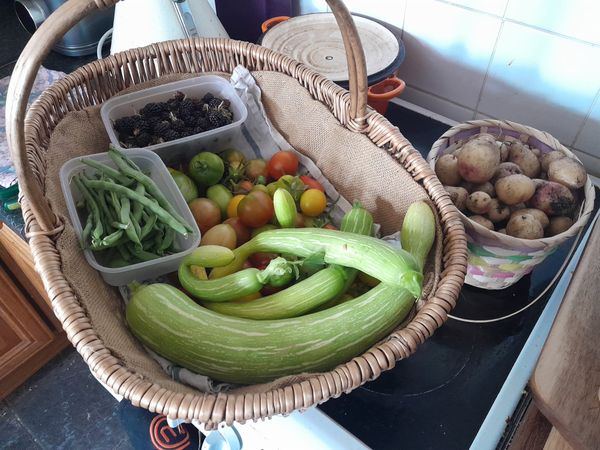
A productive allotment can produce an enormous amount of food in a surprisingly short space of time.
Beans go from perfect to enormous.
Courgettes seem to double in size overnight.
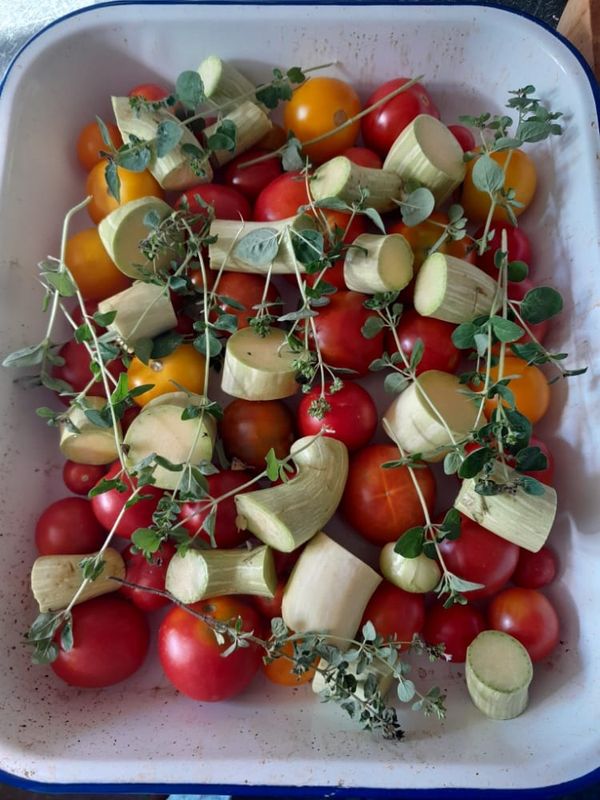
Tomatoes suddenly start ripening faster than you can eat them.
If you're short on time, harvesting is productive work.
Don't overlook it simply because it isn't as satisfying as digging or clearing.
Every kilogram you bring home is food you've grown.
The 20-minute allotment visit
If you've only got 20 minutes, you can still get quite a lot done.
Spend the first five minutes walking around the plot.
Look.
What's ready to harvest?
What's struggling?
What's fallen over?
Does anything need watering?
Then spend ten minutes dealing with the most important thing you've spotted.
Use the final five minutes to harvest anything ready and make a quick note of what needs doing next time.
That's it.
You haven't transformed the plot.
But you've kept it moving.
And that's the point.
Make the allotment fit around your life
One of the easiest mistakes to make is building your allotment routine around the amount of time you'd like to have.
Build it around the time you actually have.
If you can normally manage two longer visits a week, great.
If work means you can only get there for half an hour on a Tuesday evening, make that useful.
If weekends are your only realistic opportunity, concentrate the bigger jobs there.
There's no correct amount of time to spend on an allotment.
The best routine is the one you can maintain.
Stop trying to make it perfect
This might be the hardest one.
A busy allotment is rarely a tidy allotment.
There will be weeds.
There will be plants growing where you didn't intend them to.
There will be jobs that have been waiting for weeks.
And sometimes a bed will look more like a jungle than the beautifully organised plot you had imagined.
That's okay.
The purpose of the allotment is to grow food, enjoy being outside and have something that works for you.
It doesn't need to look like a show garden.
If the vegetables are growing, you're doing something right.
Use the harvest as motivation
There's another reason I think harvesting is particularly useful when you're busy.
It gives you an immediate sense of achievement.
You might not have had time to weed the whole plot.
You might not have prepared the next bed.
But you've come home with tomatoes, beans, potatoes or courgettes that you grew yourself.
That's tangible progress.
And sometimes that little boost is enough to make you want to go back again.
How we're doing on the 100kg challenge
This is also where things get interesting for the AHA 100kg Harvest Challenge.
At the moment, the total harvest stands at:
58.159kg
That's already more than halfway to 100kg.
And there's still plenty to come.
The winter squash haven't even been harvested yet.
That means the final total is still very much up for grabs.
It's a useful reminder that the harvest doesn't always arrive in a nice, steady stream.
There are quiet periods where you're wondering whether you're ever going to grow anything.
Then suddenly you've got a mountain of produce coming out of the plot.
So rather than worrying about whether every individual visit is productive, I'm looking at the bigger picture.
56.662kg is 56.662kg of food that wasn't there before.
And with the winter squash still to come, there's a reasonable chance that the final tally could look very different again by the end of the season.
You don't have to do everything
If you're busy, the most important thing is to resist the feeling that you're falling behind.
You probably aren't.
The weeds will still be there.
The jobs will still be there.
The next weekend will come.
What matters is keeping enough of the important things moving that the plot continues to produce.
Harvest what's ready.
Look after what needs attention.
Do one small job if you've got time.
Then leave.
Sometimes "I kept things ticking over" is a successful allotment day.
And when life gets busy, that's exactly what you need.
Keep growing with us
If you're trying to keep an allotment productive without allowing it to take over your life, we're figuring it out as we go.
From seasonal growing jobs and harvests to the realities of trying to grow as much food as possible around everything else life throws at you, I'll be sharing what works, what doesn't and what I'm learning along the way.